Bienvenue sur le site de la Banque nationale de Belgique
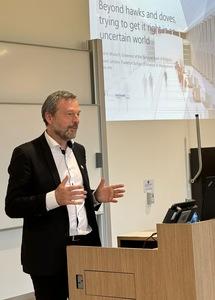
Presentation du gouverneur Wunsch à la Frankfurt School of Finance & Management
Le gouverneur Pierre Wunsch vient de donner une présentation à la Frankfurt School of Finance & Management sur la gestion de la politique monétaire en ces temps incertains.
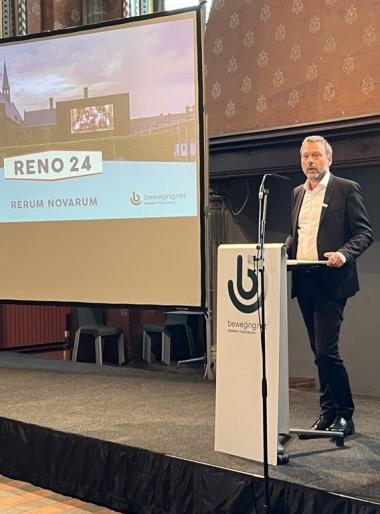
Discours du gouverneur Wunsch à l’occasion de Rerum Novarum
Le 9 mai marque la fête du mouvement ouvrier chrétien, baptisée Rerum Novarum. À cette occasion, le gouverneur Wunsch a prononcé un discours à l’invitation de beweging.net Midden-Vlaanderen.
L’économie belge progresse au premier trimestre 2024
Le produit intérieur brut (PIB) a progressé de 0,3 % par rapport au trimestre précédent. En comparaison au trimestre correspondant de l’année passée, la croissance s’établit à 1,3 %. La valeur ajoutée a progressé dans l’industrie, les services maintiennent une croissance positive, seule la construction montre un repli.

Le nombre de personnes en incapacité de travail à long terme est en augmentation
Les réformes vont dans la bonne direction mais n’ont pas encore mené à une hausse des sorties. Trajet de soins et programmes de réinsertion professionnelle doivent être conçus de manière jointe. Une orientation rapide et un processus de réintégration accéléré, tout en tenant compte de l'état de santé, sont essentiels.

Le tableau de bord sur le climat a été mis à jour
Le coût macroéconomique de la transition vers la neutralité climatique est gérable. C’est ce que révèle la mise à jour du tableau de bord sur le climat qui vient d’être publiée.

Les fonds d'investissement ont affiché une forte croissance
En 2023, la valeur des parts émises par les fonds d’investissement belges a augmenté, atteignant 228,7 milliards d'euros (+ 26,6 milliards d'euros). Les ménages belges ont continué d'investir, détenant des parts de fonds pour une valeur totale de 125,4 milliards d'euros (+9,1 milliards d'euros).
- 14 mai 2024 15:00
Chiffres mensuels de la CCP – avril 2024
- 15 mai 2024 11:00
Communiqué de presse - Statistique du commerce extérieur (2024-02)
- 15 mai 2024 11:00
Statistique du commerce extérieur - Bulletin mensuel (2024-02)
- 16 mai 2024 13:00
Financial Stability Report 2024
- 23 mai 2024 11:00
Communiqué de presse - Indicateur de confiance des consommateurs (2024-05)
- 27 mai 2024 15:00
Communiqué de presse - Baromètre de conjoncture (2024-05)
- 31 mai 2024 11:00
Communiqué de presse - ICN - Agrégats trimestriels (2024-I)
- 05 juin 2024 11:00
Business Cycle Monitor - Juin 2024
- 07 juin 2024 12:00
Projections économiques pour la Belgique - Printemps 2024
- 14 juin 2024 11:00
Communiqué de presse - Statistique du commerce extérieur (2024-03)